
Appearance
BlueFox Email vs MailerLite
A scope note first: MailerLite has grown into a small-business suite, a website builder, a blog, landing pages, digital products, bookings, quizzes, all bundled under one subscription. BlueFox Email doesn't do any of that; it's only email. Weighing MailerLite's full toolkit against a product that doesn't compete with most of it wouldn't be a fair comparison, so this one is scoped to what's actually comparable: sending email. Campaigns, automation, segmentation, deliverability, the API, pricing, and support. If a website builder or a digital storefront matters to your decision, that's a real part of MailerLite's pitch; it's just not covered here.
Two platforms, two different bets. MailerLite has been building email tools since 2010, serves well over a million users, and backs that up with a large support operation and more than a decade of product iteration. BlueFox is a much newer, much smaller product, built by a small team, with a narrower feature set by design. Neither of those facts alone tells you which one to pick; they just tell you what kind of company you're buying from. Numbers reflect public pricing and documentation as of October 2026.
The short version
MailerLite is a mature, well-reviewed email platform: drag-and-drop, simple, and custom HTML editors on every plan, A/B testing even on Free, multivariate testing, auto-resend and RSS campaigns from Comfort, Smart Sending, native Shopify and WooCommerce integrations, and 24/7 live chat on its Power plan, backed by a company that's been doing this since 2010. The trade-off is that you pay by how many active subscribers you have rather than how much you actually send, several useful features (auto-resend, multivariate testing, RSS campaigns, dynamic content) start at Comfort, transactional email is a separate product, and the free tier was cut again in June 2026.
BlueFox Email is a much smaller, newer product. Every feature ships on every plan including free, marketing and transactional sending live in one account instead of two, and you can optionally run sending through your own AWS account. What you're trading for that is a smaller, newer company: a small team rather than a large support org, a much shorter track record, and a smaller knowledge base and community to lean on if you get stuck.
Both are legitimate, well-built ways to send email. Which one costs less and fits better depends heavily on your specific shape of sending and how much you value company scale versus pricing flexibility.
The pricing model split
MailerLite bills by active subscribers, then caps how many emails the Comfort plan lets you send. BlueFox bills by emails actually sent, with no subscriber fee at all. Neither model is objectively cheaper; each one is cheaper in some situations and pricier in others.
MailerLite (priced per active subscriber)
MailerLite has four plans: Free (up to 250 active subscribers, 2,500 emails a month, 2 seats, community support and knowledge base), Comfort, Power, and custom-priced Enterprise for lists above 200,000 subscribers. Prices below are MailerLite's monthly USD rates; annual billing takes 10% off, verified nonprofits get 30% off, and only one discount applies at a time.
| Active subscribers | Comfort | Comfort monthly emails | Power (unlimited emails) |
|---|---|---|---|
| 500 | $12/mo | 5,000 | $25/mo |
| 1,000 | $19/mo | 10,000 | $39/mo |
| 2,500 | $33/mo | 25,000 | $49/mo |
| 5,000 | $49/mo | 50,000 | $69/mo |
| 10,000 | $89/mo | 100,000 | $129/mo |
| 25,000 | $179/mo | 250,000 | $239/mo |
| 50,000 | $319/mo | 500,000 | $389/mo |
| 100,000 | $439/mo | 1,000,000 | $489/mo |
| 200,000 | $819/mo | 2,000,000 | $1,119/mo |
| Above 200,000 | Enterprise (custom) | Custom | Enterprise (custom) |
| Plan | What it includes |
|---|---|
| Free | 250 subscribers, 2,500 emails/month, 2 seats, all 3 email editors, email A/B testing, 3 automations (5 steps each), 3 signup forms, limited templates, limited API and MCP access with no sending through them, community support |
| Comfort | Sends capped at 10× your subscriber tier's ceiling, 3 seats, 24/7 email support, unlimited templates, 50 automations (100 steps each), dynamic content, multivariate testing, auto-resend and RSS campaigns, Smart Sending, AI writing assistant, preference center, logo removal, a dedicated IP available as an add-on |
| Power | Everything in Comfort, plus unlimited monthly emails (fair use, up to 200,000 subscribers), unlimited seats, unlimited automations, multiple automation triggers, priority email and 24/7 live chat support |
| Enterprise | 200,000+ subscribers, custom sending volume, dedicated success manager, dedicated IP and deliverability consultation, account audits, SLA, NDA, and custom DPA |
MailerLite counts active subscribers only (unsubscribed and bounced contacts don't count), but counting is cumulative within each billing cycle, so an address that was active at any point that month still counts even if you delete it. On a paid plan, crossing into a higher subscriber tier upgrades you automatically; on Free, sending locks once you pass 250 active subscribers. Worth knowing: MailerLite's marketing plans don't send transactional email; that's a separate sister product called MailerSend, billed on its own (Free covers 500 emails a month, Hobby is $7/month for 5,000, and Starter is $35/month for 50,000). If you need both marketing and transactional sending under MailerLite, that's two subscriptions.
BlueFox Email (priced per send)
BlueFox Email charges per send, never per contact. One send is one email delivered to one recipient, and transactional, triggered, and campaign emails all cost the same. Contacts are unlimited and free, every plan and pack includes every feature, and sends are bought at the workspace level and shared across all projects. All prices below exclude VAT, which is applied at checkout based on your local rate.
There are two ways to pay (a recurring monthly plan or one-time send packs) and two ways to send: Standard, where BlueFox Email manages the sending infrastructure, or BYO AWS SES, which gives 2× the sends at the same price while you pay AWS directly for sending. New workspaces get a one-time allowance of 3,000 free sends on Standard pricing or 6,000 on BYO SES pricing, valid for 12 months, with no credit card required.
Monthly plans (excl. VAT)
Best for regular, steady sending.
| Plan | Price / month | Standard sends / month | BYO AWS SES sends / month |
|---|---|---|---|
| Starter | $6 | 5,000 | 10,000 |
| Basic | $9 | 10,000 | 20,000 |
| Growth | $19 | 25,000 | 50,000 |
| Pro | $35 | 50,000 | 100,000 |
| Business | $59 | 100,000 | 200,000 |
| Scale | $129 | 250,000 | 500,000 |
| Elite | $239 | 500,000 | 1,000,000 |
Each billing cycle brings a fresh sending allowance, and unused sends do not roll over. You can cancel anytime and keep using your allowance until the current billing period ends, or upgrade anytime by paying the price difference, with the new plan starting right away.
One-time send packs (excl. VAT)
Best for occasional or unpredictable volume, or for teams that prefer to pay upfront.
| Pack | Price | Standard | BYO AWS SES |
|---|---|---|---|
| Essential | $50 | 50,000 sends ($1.00 per 1,000) | 100,000 sends ($0.50 per 1,000) + AWS fees |
| Premium | $300 | 500,000 sends ($0.60 per 1,000) | 1,000,000 sends ($0.30 per 1,000) + AWS fees |
Pack sends are valid for 12 months from the date of purchase, and you're never billed again unless you buy another pack. Packs stack with no cap, and the oldest sends are always used first, so the newest last the longest.
AWS fees (BYO SES only)
In BYO mode, AWS bills you directly for sending, separately from your BlueFox Email plan or pack. At AWS's à la carte rate of $0.10 per 1,000 emails, 100,000 sends add about $10, and every BYO figure in this comparison uses that rate.
If your AWS account is new, check which SES pricing option it's on. Since July 21, 2026, new SES accounts (and account/region combinations with no metered SES activity since June 1, 2025) start on the SES Essentials plan at $0.16 per 1,000 emails for the first 10M per month. You can switch to à la carte pricing at any time.
Dedicated IP
Teams on managed sending can add a dedicated sending IP for $50/month (excl. VAT), at any volume. The IP is reserved for your workspace, so your sender reputation depends only on your own sending. To set one up, email hello@bluefox.email. On BYO AWS SES there's nothing to buy from BlueFox Email: dedicated IPs are set up and billed in your own AWS account.
Custom volume
If you need more than the published plans and packs cover, contact sales at hello@bluefox.email. The team sets up a discovery call to plan your volume and onboarding.
How to read the scenarios
Each scenario below states its own subscriber count and send volume instead of assuming a typical sending frequency, and includes transactional email where it applies, since most businesses send both. MailerLite prices are its monthly list prices for the subscriber tier each scenario needs, with MailerSend added for transactional volume. All BlueFox Email prices exclude VAT, and BYO SES figures include AWS fees at $0.10 per 1,000 emails.
Scenarios: monthly plans
Monthly plans suit regular, steady sending, so these scenarios compare MailerLite's monthly price with the BlueFox Email plan that fits each month's volume.
Small list, mixed marketing and transactional (500 subscribers × 3 newsletters = 1,500 marketing sends, plus 1,000 transactional emails = 2,500 sends/month):
- MailerLite Comfort at 500 subscribers ($12, inside its 5,000-email cap) plus MailerSend Hobby ($7, since 1,000 transactional emails exceed MailerSend Free's 500) = $19/month across two accounts.
- BlueFox Email Standard: the 3,000 free sends cover roughly the first month, then Starter at $6/month (5,000 sends).
- BYO SES: the 6,000 free sends cover roughly the first two months, then Starter at $6/month plus about $0.25 in AWS fees.
Small list, sent to very often (500 subscribers emailed daily, about 15,000 marketing sends, plus 500 transactional emails = 15,500 sends/month):
- MailerLite: Comfort's 5,000-email cap at this tier isn't enough, so this needs Power at $25/month, with unlimited sends; the transactional volume fits MailerSend Free. Total: $25/month across two accounts.
- BlueFox Email Standard: Growth at $19/month (25,000 sends).
- BYO SES: Basic at $9/month (20,000 sends) plus ~$1.55 AWS = ~$10.55/month.
Larger list, transactional-heavy (5,000 subscribers × 1 newsletter = 5,000 marketing sends, plus 40,000 transactional emails = 45,000 sends/month):
- MailerLite Comfort at 5,000 subscribers ($49) plus MailerSend Starter ($35 for 50,000 emails) = $84/month across two accounts.
- BlueFox Email Standard: Pro at $35/month (50,000 sends).
- BYO SES: Growth at $19/month (50,000 sends) plus ~$4.50 AWS = ~$23.50/month.
Growing business, weekly newsletter plus product email (25,000 subscribers × 4 newsletters = 100,000 marketing sends, plus 50,000 transactional emails = 150,000 sends/month):
- MailerLite Comfort at 25,000 subscribers ($179) plus MailerSend Starter ($35) = $214/month.
- BlueFox Email Standard: Scale at $129/month (250,000 sends).
- BYO SES: Business at $59/month (200,000 sends) plus ~$15 AWS = ~$74/month.
Frequent sender, mid-size list (10,000 subscribers emailed daily = about 300,000 marketing sends/month):
- MailerLite Power at 10,000 subscribers: $129/month, unlimited sends.
- BlueFox Email Standard: Elite at $239/month (500,000 sends; Scale's 250,000 isn't enough).
- BYO SES: Scale at $129/month (500,000 sends) plus ~$30 AWS = ~$159/month.
MailerLite wins this one clearly: Power's unlimited sending beats per-send billing once you're emailing a mid-size list every day.
Scenarios: one-time packs
Packs suit occasional or unpredictable sending. BlueFox Email pack sends stay valid for 12 months, so each scenario below looks at a full year. MailerLite bills every month for your active subscribers, whether you send that month or not.
Occasional campaigns (10,000 subscribers × 4 sends a year, such as a quarterly newsletter = 40,000 sends/year):
- MailerLite Comfort at 10,000 subscribers kept all year: $89 × 12 = $1,068/year, or about $961 with annual billing.
- BlueFox Email Standard: one Essential pack ($50) covers the whole year, with 10,000 sends to spare.
- BYO SES: one Essential pack ($50, 100,000 sends) plus ~$4 AWS = ~$54/year.
A big list, every few months (50,000 subscribers × 1 send every 3 months, such as a seasonal announcement = 200,000 sends/year):
- MailerLite Comfort at 50,000 subscribers kept all year: $319 × 12 = $3,828/year, or about $3,445 with annual billing.
- BlueFox Email Standard: four Essential packs ($200) cover exactly 200,000 sends, bought before each send if you prefer.
- BYO SES: two Essential packs ($100, 200,000 sends) plus ~$20 AWS = ~$120/year.
Cost summary: The pattern behind all of these: MailerLite's marketing cost tracks list size, transactional email always means a second MailerSend subscription, and Power's unlimited sends reward very frequent sending. BlueFox bills combined volume in one account regardless of list size. In the scenarios above, BlueFox Email comes in roughly 24% to 72% lower on monthly plans where transactional email or moderate frequency is involved, and 95% to 97% lower for occasional senders. The exception is daily sending to a mid-size list, where MailerLite Power is the cheaper option.
Campaigns: what you can actually send
MailerLite gives you three editors on every plan, including Free: drag-and-drop, a simple editor, and a custom HTML editor. Campaign types include Regular (a standard one-off send), email A/B testing (subject line, content, or sender name, available even on Free), Auto resend (automatically re-sends to non-openers with a changed subject line, from Comfort), RSS (auto-generates and sends a campaign whenever your blog's RSS feed publishes something new, from Comfort), and Multivariate testing, from Comfort, which tests combinations of variables at once rather than one at a time. Smart Sending uses each subscriber's past interactions to pick their optimal send time, and Comfort adds an AI writing assistant and the full subject-line generator (Free gets a limited version). Free accounts get a limited slice of the template library; Comfort unlocks all of it.
BlueFox's campaign side is built around its Chamaileon-based drag-and-drop editor rather than distinct campaign types: reusable blocks, brand variables for colors, fonts, and logos, Handlebars personalization with loop and conditional elements, a stock photo library, a built-in photo editor, dark mode preview, Outlook-safe VML fallbacks, and a custom code element for dropping in raw HTML, plus standalone Raw HTML and Plain Text editors. It doesn't have MailerLite's A/B testing, auto-resend, or multivariate campaign types; that kind of testing infrastructure isn't part of BlueFox's product yet. Where MailerLite treats RSS-to-email as one specific campaign type, BlueFox's data feeds pull live RSS or JSON content into an email at send time, with dynamic images and loop rendering, a broader mechanism, though it's answering a different need than MailerLite's testing tools.



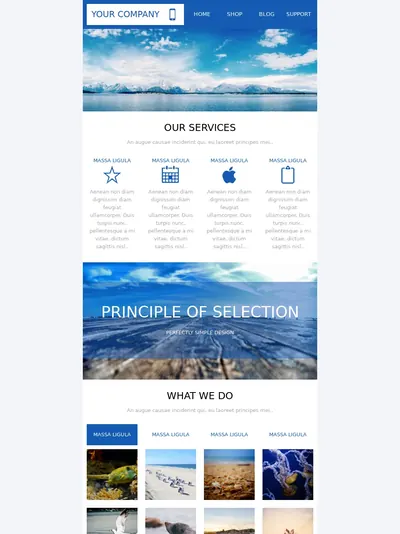

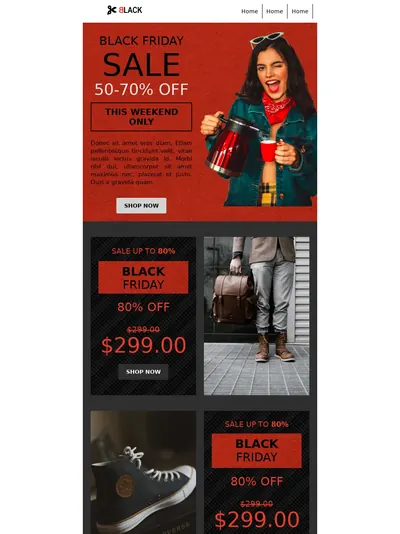



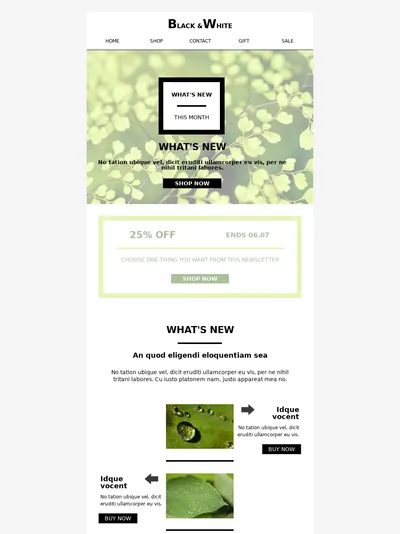
Template 1 of 10: Marketing Agency Newsletter
The trade-off between the two is fairly clean: MailerLite has more campaign types and testing tools, several of them starting at Comfort; BlueFox has fewer campaign-specific tools but doesn't gate any of them by plan, so a free BlueFox account gets the same design and personalization capability as a paid one.
One deliverability-adjacent detail: MailerLite requires domain authentication before you can send from your own domain, standard industry practice, and new accounts go through an approval review. BlueFox's production gate works differently: projects start in sandbox mode and move to production after domain verification and a review, with live bounce-rate (under 2.5%) and complaint-rate (under 0.05%) thresholds shown directly in the dashboard rather than a one-time check. Both are reasonable approaches to the same underlying problem, keeping bad actors off the platform.
Automation
MailerLite's visual automation builder combines delays, conditions, and A/B tests with actions like sending an email, firing a webhook, updating a custom field, or moving someone between groups. E-commerce triggers are available on every plan, alongside the common cases: joining a group, clicking a link, completing a form, a date-based anniversary. Multiple automation triggers per workflow are Power-only, and active automation counts are capped below Power: 3 on Free (5 steps each), 50 on Comfort (100 steps each), and unlimited on Power (100 steps each).
BlueFox's automation builder is node-based, with dedicated node types for Send Email, Timer, Audience Filter, Branching (with condition sub-nodes), Notify, Set Value, Manage Tags, Webhook, Complete, and Exit Criteria, triggered by contact events, segment entry/exit, or time-based schedules. It doesn't cap the number of automations by plan, and it lets you edit a running automation and choose whether the change applies to upcoming contacts only or to contacts already mid-flow, without rebuilding it from scratch. On the other side, MailerLite's e-commerce triggers (cart abandonment, purchases) are more developed out of the box than anything in BlueFox's trigger list, which leans more general-purpose, and MailerLite supports A/B tests inside automations, which BlueFox doesn't.
0of 1,240 contacts matched
You chooseWho should hear this?
- Active in last 30 days
- Plan: Pro
- Project created

We deliver toOnly the right people


Stop blasting everyone. Filter by behavior, plan, activity, or any property you've collected. Higher engagement, less waste, more revenue per send.
On segmentation, MailerLite offers unlimited dynamic segments, interest groups, and tags on every plan, built from subscriber fields, engagement, geography, signup source, and purchase history through e-commerce integrations. BlueFox's segments run on property and tag conditions with full AND/OR logic across a wide operator set (equals, contains, is-empty, greater/less-than, and engagement conditions with day-window filters), auto-updating as contacts change, which makes unusual or precise segments somewhat easier to build. Both are genuinely capable tools; this one is closer to a wash than most sections here.
The API and webhooks
MailerLite's API is REST-based and covers subscribers, groups, segments, custom fields, automations, campaigns, forms, batch requests, and a full e-commerce API for store integrations. It also offers an MCP server for direct AI integrations, plus webhooks and official SDKs for PHP, Node.js, Python, Go, and Ruby. The e-commerce API in particular is more built-out than anything comparable on BlueFox's side.
One crucial caveat for developers: on MailerLite's Free plan, API, webhook, and MCP access are all limited, and sending through the API or MCP server isn't included at all. You need a paid plan to send programmatically.
BlueFox's API covers subscriber-list management (subscribe, unsubscribe, pause, activate), contact creation and updates, transactional and triggered sends with attachments, and the same full webhook event set (sent, failed, opens, clicks, bounces, complaints, subscribe, unsubscribe, pause, resubscribe) on every plan including free, alongside an open-source, local MCP server for AI agents. The one structural difference: BlueFox's API can trigger an actual transactional send directly from the same account on every plan, including free, where MailerLite's marketing API manages campaigns and automations but hands transactional sending off to the separate MailerSend product and its own API and credentials.
Scale, track record, and support
This is worth stating plainly rather than folding into a side note, because it's a real factor in the decision. MailerLite has been building email tools since 2010 and serves well over a million users. Its data is stored in the EU in an ISO 27001-certified data center, and independent reviewers consistently rate it well for ease of use. Support scales with plan: Free gets the knowledge base and community (plus 24/7 live chat and email during the 14-day premium trial), Comfort gets 24/7 email support, and Power gets priority email and 24/7 live chat, backed by a large knowledge base built up over more than a decade.
BlueFox is a different kind of company: a small team, with founder Gyula Németh, who has been building HTML email tooling since 2013 (edmdesigner.com, chamaileon.io, emailhero.io before BlueFox), still hands-on alongside the rest of the team. Support is the same on every plan, including free, and you're talking to people who actually build the product rather than a support queue. What you don't get yet is MailerLite's scale: a much smaller knowledge base and community, and fewer years of track record to point to.
Neither structure is strictly better. A large, established team means more support capacity, a longer track record, and third-party validation. A small team means more direct access and faster iteration, with the trade-offs that come from being newer and smaller.
On infrastructure ownership specifically: BlueFox runs on its own managed infrastructure by default, same as MailerLite, with no AWS account needed. On top of that, it optionally offers a BYO-SES mode: connect your own AWS account via access key or STS credentials and sending runs on your infrastructure with isolated reputation, doubling the sends on every plan and pack. A dedicated IP is a $50/month (excl. VAT) add-on for managed sending, requested by email, at any volume; in BYO mode, you set one up directly through your own AWS SES account instead, so it isn't a separate BlueFox charge there. MailerLite doesn't offer a BYO-infrastructure option; sending always runs on MailerLite's own infrastructure, which for most users is simpler to operate since there's no AWS account to manage. MailerLite lists a dedicated IP as an add-on from Comfort upward and as part of Enterprise, but doesn't publish its price, and third-party reviews describe it as assessed case by case for higher-volume senders, with roughly 50,000 emails a week cited as the minimum.
The free tier
BlueFox's free tier is a one-time allowance of 3,000 sends (6,000 on BYO-SES), valid for 12 months, with every feature unlocked and the same support as paid plans.
MailerLite's free tier has been shrinking. On June 16, 2026, alongside renaming its paid plans (Growing Business became Comfort, Advanced became Power) and updating prices and limits, MailerLite cut Free from 500 subscribers and 12,000 emails a month to 250 subscribers and 2,500 emails, after an earlier cut from 1,000 subscribers to 500 on September 23, 2025. Paid prices rose at the same time: compared with the old Growing Business prices reported by third-party trackers, Comfort now costs $49 instead of $39 a month at 5,000 subscribers and $89 instead of $73 at 10,000, and automations, forms, landing pages, websites, and digital products are now capped by number on every plan below Power. It's still a real, usable free tier, with no time limit, all three editors, A/B testing, and genuine automation included, but the trend over the past year has been consistently downward.
So, which one
If you value a mature, extensively reviewed product from an established company, with strong e-commerce integrations, built-in testing tools, and a large support team to fall back on, and you're comfortable with pricing that tracks your list size rather than your sending volume, MailerLite is a genuinely solid choice for email sending, and its Power plan is hard to beat for very frequent senders. If you'd rather pay for exactly what you send, want marketing and transactional email in one account instead of two, want every feature unlocked regardless of plan, and are comfortable with a smaller, newer company in exchange for that flexibility and direct access, BlueFox fits better.
There isn't a universally correct answer here. The honest read is that MailerLite wins on scale, proven track record, testing tools, and breadth of campaign and e-commerce tooling, while BlueFox wins on pricing flexibility, feature access at every tier, and a unified account for marketing and transactional mail. Weigh those against what actually matters for your list, your sending habits, and how much company size factors into your decision.
Also worth a look: how BlueFox Email compares to MailerSend, Loops, and Mailchimp.
Pay for what you send, not the list you keep
No subscriber fees, no per-contact billing. Start free with 3,000 sends, and take your infrastructure with you if you ever want to run on your own AWS account.